
A marketing manager got in touch in February.
Her company's website traffic was up. The business was growing. But enquiries weren't keeping pace — and she'd spent weeks in Google Analytics trying to figure out why.
Bounce rate looked reasonable. Session duration wasn't alarming. Nothing pointed to an obvious problem.
When I looked at the homepage, the issue was clear in under a minute.
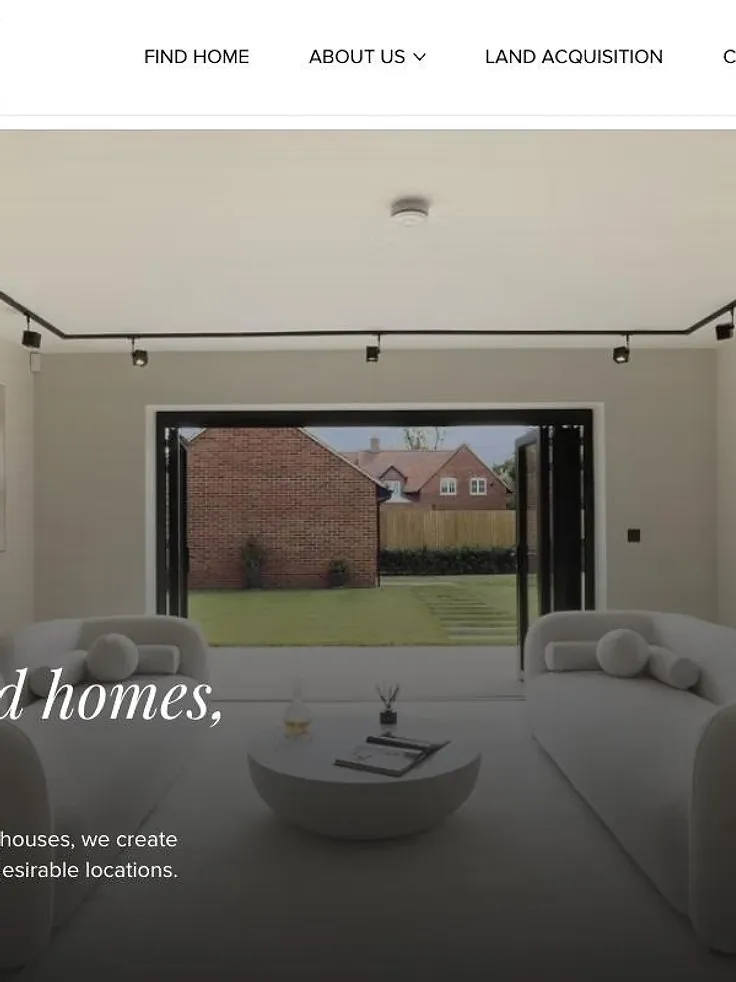
The site opened with the company's founding story. A timeline going back to 2011. Awards. Team photos. All of it accurate. None of it written for the person who'd just landed there trying to decide whether to get in touch.
This is what a silent trust failure looks like from the inside. The numbers don't flag it. The only sign is the gap between the traffic you're getting and the enquiries you should be.
Why first impressions happen faster than you expect
People form an opinion about a website in approximately 50 milliseconds — before they've consciously read anything.
This was demonstrated by Gitte Lindgaard and colleagues in a study published in Behaviour & Information Technology in 2006. They found that visual appeal judgements are formed almost instantly, and with remarkable consistency between different viewers. Fifty milliseconds is faster than a conscious decision can be made.
Those first 50ms don't seal the deal. But they determine whether someone stays long enough to give you the chance.
If the visual impression doesn't signal credibility — clean layout, considered design, clear hierarchy — the instinct is to leave. And instincts move faster than reasoning.
The gap between your traffic and your enquiries isn't a traffic problem. It's almost always a trust problem.
What actually causes a trust failure
It's rarely one thing. It's a pattern of signals that, individually, might not be enough to make someone leave — but together, create enough uncertainty that they do.
The most common version: a headline that introduces the company rather than speaking to the visitor's problem. A testimonials section that exists but is buried behind two clicks, filled with vague praise from unnamed sources. A design that was clearly current five years ago — not broken, but dated enough to suggest nobody has invested in this recently.
Each of these sends a quiet message. The headline says: we haven't thought about you yet. The vague testimonials say: we couldn't get anyone specific to vouch for us. The dated design says: we don't invest in our own presence.
None of this prompts a visitor to pick up the phone and tell you their concerns. They just leave.
What your analytics can't show you
Bounce rate tells you someone left quickly. It doesn't tell you why.
Session duration tells you how long someone stayed. It doesn't tell you what they were looking for, or whether they found it.
Exit pages tell you where people left. They don't tell you that the person who just closed your tab had exactly the brief you've been hoping for.
The decision not to contact you happens in someone's head before they click anything. Analytics captures behaviour. It doesn't capture the moment of doubt that drove it.
This is why so many businesses underestimate the problem. The site doesn't look broken. The numbers don't raise alarms. But the gap between people finding you and people getting in touch keeps sitting wider than it should. If your traffic is healthy but enquiries are flat, the same pattern shows up in SEO too — ranking without converting is a trust issue, not a keyword issue.
When you can't see the clients you're losing, it's easy to think you're not losing them at all.
What a trusted website actually does
A trusted website isn't complex. It's focused.
It answers the question "is this relevant to me?" within the first scroll — not by listing everything the company does, but by naming the specific problem it solves and who it solves it for.
It shows proof that specific, named people have trusted it before. Not "happy clients say great things about us" — but real testimonials with names attached, describing a result rather than a feeling. The more specific the proof, the more weight it carries.
It makes the next step obvious. One clear call to action. Not a contact form, a phone number, a chat widget, a newsletter signup, and a "learn more" button all competing on the same page. One thing to do, stated clearly.
It looks like someone is still working on it. A design that hasn't been touched since the flat-design era signals that the business hasn't invested in its own presence. The same principle applies when you lose clients before they've even read a word — first impressions are made on design before content.

Five things to check on your site today
Read your headline out loud. Does it describe what you do and who for, in plain language? Or does it welcome people to your website, describe your company's history, or state a vague benefit like "excellent results"?
Find your testimonials. How many clicks does it take from the homepage? Are they named? Do they describe a specific result, or do they say something like "brilliant to work with — would recommend"?
Count your CTAs. How many ways can a first-time visitor take a next step from your homepage? More than two is almost always too many.
Look at your site on your phone. Does it still feel current and intentional? Or does it look like something built for desktop and then squeezed?
Ask someone who doesn't know your business to read the homepage and tell you, in one sentence, what you do. If they can't, neither can a new visitor.
A website that builds trust doesn't need to do everything well. It needs to do a few things right — and do them before someone decides to leave.
Not sure where your site stands?
I've built a free five-point trust check for marketing managers who want a quick, honest read on their website. It covers the areas that most affect whether a visitor turns into an enquiry.
DM me SCORE on LinkedIn and I'll send it straight over. Or if you'd prefer to talk through your site directly, get in touch here — I'm happy to take a look.

How do I know if my website is losing clients?
The most reliable sign is a gap between your traffic and your enquiries. If people are finding you through search, referrals, or social — but your contact form isn't receiving messages proportionate to that traffic — a trust problem is often the cause. A quick self-audit of your homepage headline, social proof, and call to action will usually surface the biggest issues.
What makes a website build trust quickly?
The three things that matter most: a headline that speaks to the visitor's problem (not the company's story), specific named social proof, and a single clear call to action. A design that looks current and intentional matters too — it signals that the business is active and invested.
How quickly do visitors form an opinion about a website?
Research published in Behaviour & Information Technology by Lindgaard et al. (2006) found that people form visual appeal judgements about websites in approximately 50 milliseconds. That first impression determines whether someone stays long enough to engage with the content.
Can I improve my website's trust without a full redesign?
Yes. The headline, testimonials, and call to action are typically the highest-impact changes — and they're copy changes, not design changes. Updating your headline to speak to a specific client problem, adding one named testimonial above the fold, and simplifying to a single CTA can improve conversion significantly without touching the design.
What is the free five-point trust check?
It's a short self-assessment scoring your website across five areas most likely to cause a trust failure: value proposition clarity, social proof strength, CTA effectiveness, design credibility, and mobile experience. DM SCORE on LinkedIn to receive it.
A marketing manager got in touch in February.
Her company's website traffic was up. The business was growing. But enquiries weren't keeping pace — and she'd spent weeks in Google Analytics trying to figure out why.
Bounce rate looked reasonable. Session duration wasn't alarming. Nothing pointed to an obvious problem.
When I looked at the homepage, the issue was clear in under a minute.
The site opened with the company's founding story. A timeline going back to 2011. Awards. Team photos. All of it accurate. None of it written for the person who'd just landed there trying to decide whether to get in touch.
This is what a silent trust failure looks like from the inside. The numbers don't flag it. The only sign is the gap between the traffic you're getting and the enquiries you should be.
Why first impressions happen faster than you expect
People form an opinion about a website in approximately 50 milliseconds — before they've consciously read anything.
This was demonstrated by Gitte Lindgaard and colleagues in a study published in Behaviour & Information Technology in 2006. They found that visual appeal judgements are formed almost instantly, and with remarkable consistency between different viewers. Fifty milliseconds is faster than a conscious decision can be made.
Those first 50ms don't seal the deal. But they determine whether someone stays long enough to give you the chance.
If the visual impression doesn't signal credibility — clean layout, considered design, clear hierarchy — the instinct is to leave. And instincts move faster than reasoning.
The gap between your traffic and your enquiries isn't a traffic problem. It's almost always a trust problem.
What actually causes a trust failure
It's rarely one thing. It's a pattern of signals that, individually, might not be enough to make someone leave — but together, create enough uncertainty that they do.
The most common version: a headline that introduces the company rather than speaking to the visitor's problem. A testimonials section that exists but is buried behind two clicks, filled with vague praise from unnamed sources. A design that was clearly current five years ago — not broken, but dated enough to suggest nobody has invested in this recently.
Each of these sends a quiet message. The headline says: we haven't thought about you yet. The vague testimonials say: we couldn't get anyone specific to vouch for us. The dated design says: we don't invest in our own presence.
None of this prompts a visitor to pick up the phone and tell you their concerns. They just leave.
What your analytics can't show you
Bounce rate tells you someone left quickly. It doesn't tell you why.
Session duration tells you how long someone stayed. It doesn't tell you what they were looking for, or whether they found it.
Exit pages tell you where people left. They don't tell you that the person who just closed your tab had exactly the brief you've been hoping for.
The decision not to contact you happens in someone's head before they click anything. Analytics captures behaviour. It doesn't capture the moment of doubt that drove it.
This is why so many businesses underestimate the problem. The site doesn't look broken. The numbers don't raise alarms. But the gap between people finding you and people getting in touch keeps sitting wider than it should. If your traffic is healthy but enquiries are flat, the same pattern shows up in SEO too — ranking without converting is a trust issue, not a keyword issue.
When you can't see the clients you're losing, it's easy to think you're not losing them at all.
What a trusted website actually does
A trusted website isn't complex. It's focused.
It answers the question "is this relevant to me?" within the first scroll — not by listing everything the company does, but by naming the specific problem it solves and who it solves it for.
It shows proof that specific, named people have trusted it before. Not "happy clients say great things about us" — but real testimonials with names attached, describing a result rather than a feeling. The more specific the proof, the more weight it carries.
It makes the next step obvious. One clear call to action. Not a contact form, a phone number, a chat widget, a newsletter signup, and a "learn more" button all competing on the same page. One thing to do, stated clearly.
It looks like someone is still working on it. A design that hasn't been touched since the flat-design era signals that the business hasn't invested in its own presence. The same principle applies when you lose clients before they've even read a word — first impressions are made on design before content.
Five things to check on your site today
Read your headline out loud. Does it describe what you do and who for, in plain language? Or does it welcome people to your website, describe your company's history, or state a vague benefit like "excellent results"?
Find your testimonials. How many clicks does it take from the homepage? Are they named? Do they describe a specific result, or do they say something like "brilliant to work with — would recommend"?
Count your CTAs. How many ways can a first-time visitor take a next step from your homepage? More than two is almost always too many.
Look at your site on your phone. Does it still feel current and intentional? Or does it look like something built for desktop and then squeezed?
Ask someone who doesn't know your business to read the homepage and tell you, in one sentence, what you do. If they can't, neither can a new visitor.
A website that builds trust doesn't need to do everything well. It needs to do a few things right — and do them before someone decides to leave.
Not sure where your site stands?
I've built a free five-point trust check for marketing managers who want a quick, honest read on their website. It covers the areas that most affect whether a visitor turns into an enquiry.
DM me SCORE on LinkedIn and I'll send it straight over. Or if you'd prefer to talk through your site directly, get in touch here — I'm happy to take a look.
How do I know if my website is losing clients?
The most reliable sign is a gap between your traffic and your enquiries. If people are finding you through search, referrals, or social — but your contact form isn't receiving messages proportionate to that traffic — a trust problem is often the cause. A quick self-audit of your homepage headline, social proof, and call to action will usually surface the biggest issues.
What makes a website build trust quickly?
The three things that matter most: a headline that speaks to the visitor's problem (not the company's story), specific named social proof, and a single clear call to action. A design that looks current and intentional matters too — it signals that the business is active and invested.
How quickly do visitors form an opinion about a website?
Research published in Behaviour & Information Technology by Lindgaard et al. (2006) found that people form visual appeal judgements about websites in approximately 50 milliseconds. That first impression determines whether someone stays long enough to engage with the content.
Can I improve my website's trust without a full redesign?
Yes. The headline, testimonials, and call to action are typically the highest-impact changes — and they're copy changes, not design changes. Updating your headline to speak to a specific client problem, adding one named testimonial above the fold, and simplifying to a single CTA can improve conversion significantly without touching the design.
What is the free five-point trust check?
It's a short self-assessment scoring your website across five areas most likely to cause a trust failure: value proposition clarity, social proof strength, CTA effectiveness, design credibility, and mobile experience. DM SCORE on LinkedIn to receive it.